
⚠ This website contains flashing lights, rapid animations, and high-contrast visuals that may trigger seizures or adverse reactions in people with photosensitive epilepsy.
⚠ This website contains flashing lights, rapid animations, and high-contrast visuals that may trigger seizures or adverse reactions in people with photosensitive epilepsy.
Rlly? you wanna test us this far?
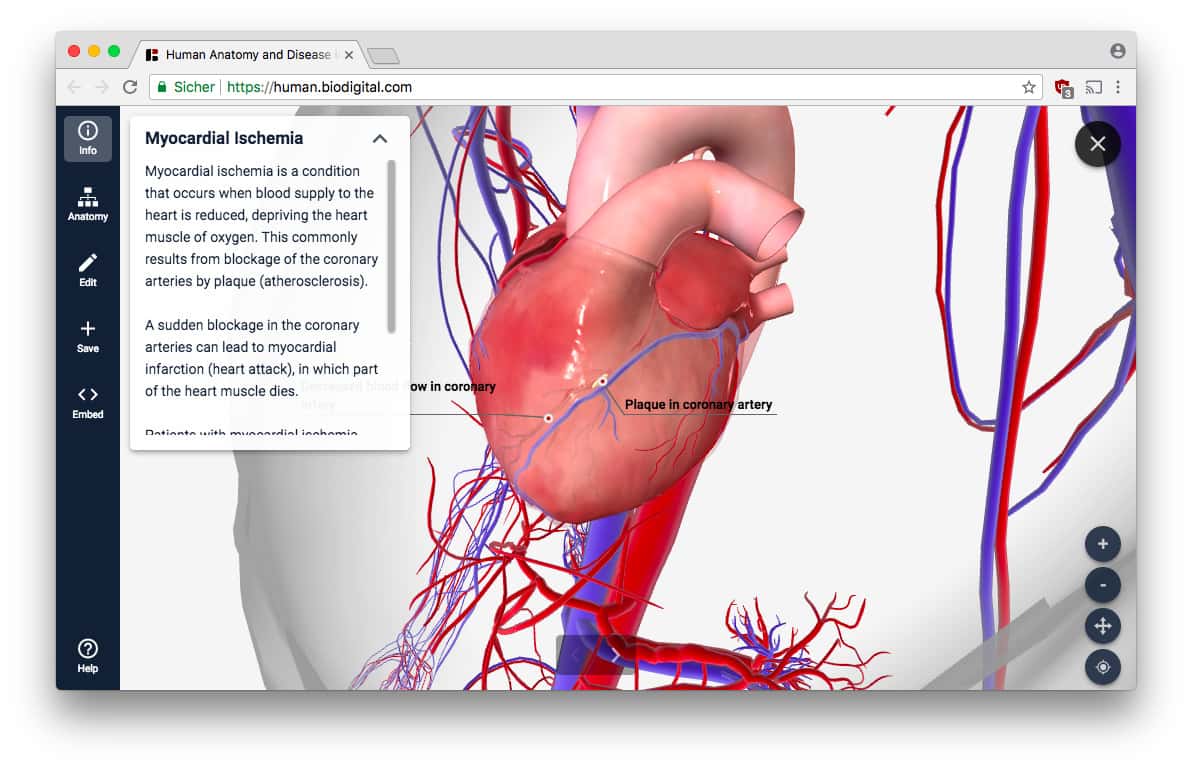
When WebGL shipped in browsers in 2011, it was mostly ignored by the mainstream web development community. Thirteen years later, it powers everything from Google Maps to AAA-quality games running at 60fps in a browser tab. The story of WebGL is the story of the web catching up to native — and in some cases, surpassing it.
The web's original rendering model was strictly 2D — HTML and CSS described boxes, text, and images positioned on a flat plane. SVG extended this to vector graphics, Canvas 2D added raster drawing, and then WebGL arrived and broke the entire mental model. WebGL is a JavaScript API that provides direct access to the GPU through OpenGL ES, enabling hardware-accelerated 3D rendering, custom shaders, and real-time computation at a scale that the CPU-bound JavaScript runtime could never approach.
The early WebGL era was dominated by experiments — spinning 3D logos, particle systems, interactive data visualisations. But the technology matured rapidly. Three.js abstracted away the low-level OpenGL calls, making 3D accessible to more developers. Unity and Unreal Engine added WebGL export targets, bringing full game engines to the browser. GLSL shaders — the programs that run on the GPU — opened a new creative frontier for generative art and interactive experiences.
The shader language itself deserves particular attention. GLSL (OpenGL Shading Language) is a C-like language that runs on every core of the GPU simultaneously, operating on every pixel of the output in parallel. A fragment shader processing a 1920x1080 canvas is executing over two million concurrent operations per frame. This parallelism enables effects — real-time raymarching, fluid simulation, procedural noise fields — that would be computationally impossible to achieve in sequential CPU code. The demoscene community, which has been pushing hardware boundaries since the 1980s, migrated to WebGL and brought its techniques with it, seeding a generation of web developers with creative coding practices that had previously existed only in specialised communities.
Today, WebGL is the foundation of a new category of web experience that is increasingly indistinguishable from native applications in capability and performance. WebGPU, its successor, is beginning to ship in browsers and promises another order-of-magnitude improvement in GPU access, including compute shaders that bring machine learning inference and physics simulation into the browser runtime. The browser has become a platform — and the trajectory of GPU-powered rendering suggests it is still in the early stages of what it will eventually become.

Take control of creativity, tech and scale
confidently in the new age
Take control of creativity, tech and scale
confidently in the new age

© 2026 Digital Control. All Rights Reserved.
Digital Control is a registered subsidiary of Digital Blacksheep Ventures (Private) Limited.