
⚠ This website contains flashing lights, rapid animations, and high-contrast visuals that may trigger seizures or adverse reactions in people with photosensitive epilepsy.
⚠ This website contains flashing lights, rapid animations, and high-contrast visuals that may trigger seizures or adverse reactions in people with photosensitive epilepsy.
Rlly? you wanna test us this far?
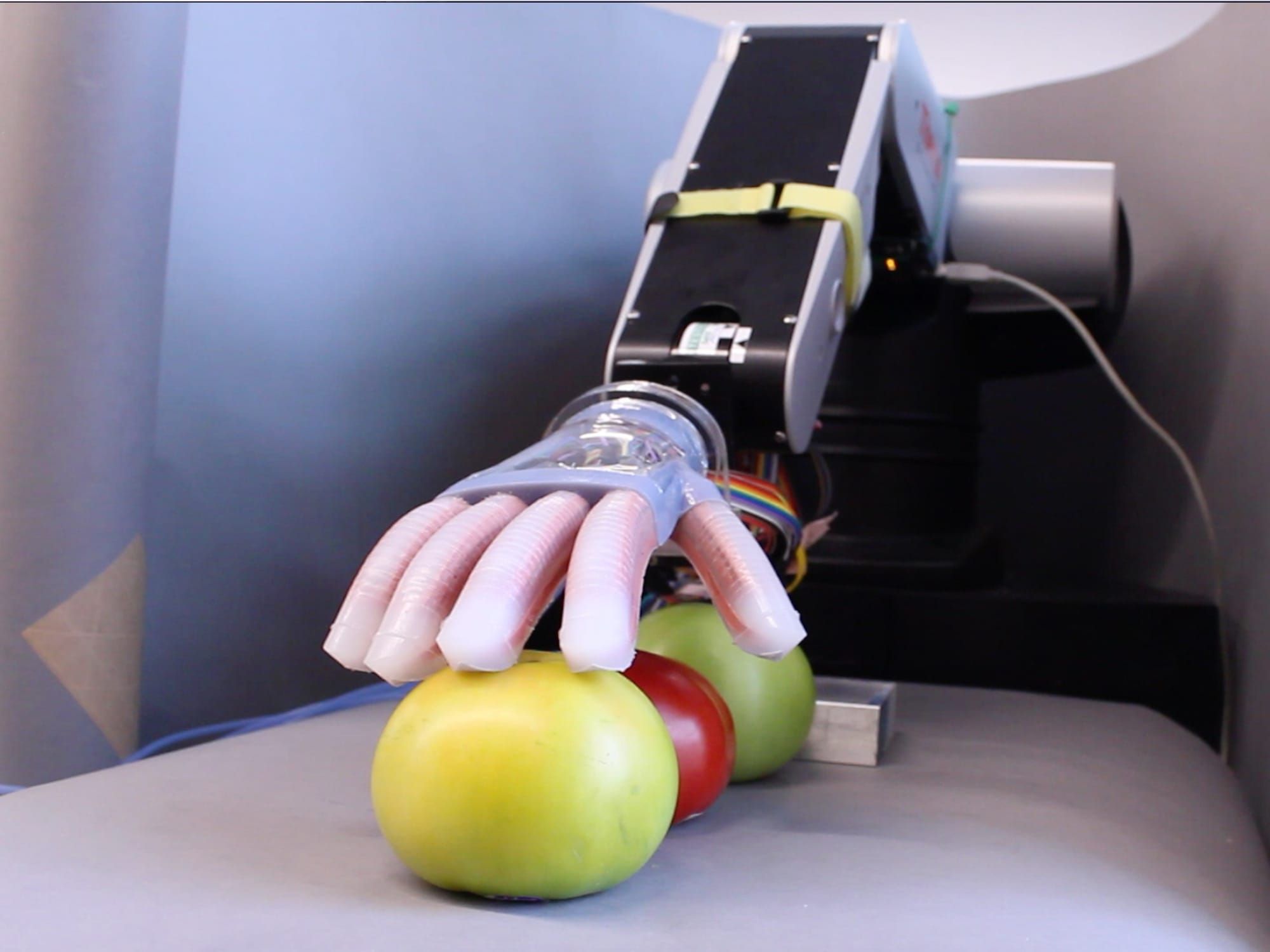
Traditional rigid robotics excels at precision in controlled environments but fails catastrophically when encountering the unpredictability of the real world. Soft robotics — systems made from compliant, flexible materials — are unlocking applications in medicine, agriculture, and human-robot interaction that were previously impossible.
The robotic arms in automotive assembly plants are engineering marvels — but you would not want to share a workspace with one. Their rigidity, speed, and precision that make them excellent at repeatable industrial tasks make them dangerous around anything biological and adaptive. Soft robotics addresses this by rethinking the fundamental material of robotic systems.
Instead of rigid aluminium and steel actuated by servo motors, soft robots use silicone, fabric, and flexible polymers actuated by pneumatic pressure, shape memory alloys, or cable tension. They deform rather than break on contact. They distribute force rather than concentrate it. Researchers at Harvard's Wyss Institute have demonstrated soft robotic grippers that can pick up a raw egg, a sheet of paper, and a grape without pre-programming — tasks that still challenge conventional robotic systems.
The biomedical applications are particularly transformative. Surgical robots built from soft materials can navigate through the body's natural cavities, conforming to tissue rather than displacing it. Soft exoskeletons for stroke rehabilitation can assist movement without the rigid mechanical constraints that make traditional exoskeletons uncomfortable and difficult to calibrate. Soft grippers in elder care can assist with dressing and hygiene with the gentle compliance that the task demands.
The materials science underpinning soft robotics is advancing rapidly. Researchers are developing materials that change stiffness on demand — soft for compliance, rigid for load-bearing — using temperature, electrical current, or pneumatic pressure as the control variable. Electroactive polymers that actuate directly in response to electrical stimulation are eliminating the need for pneumatic infrastructure entirely. The field is converging toward a new class of robots that are not just machines that operate in the world — they are devices that participate in it, with the physical intelligence to adapt rather than impose.

Take control of creativity, tech and scale
confidently in the new age
Take control of creativity, tech and scale
confidently in the new age

© 2026 Digital Control. All Rights Reserved.
Digital Control is a registered subsidiary of Digital Blacksheep Ventures (Private) Limited.